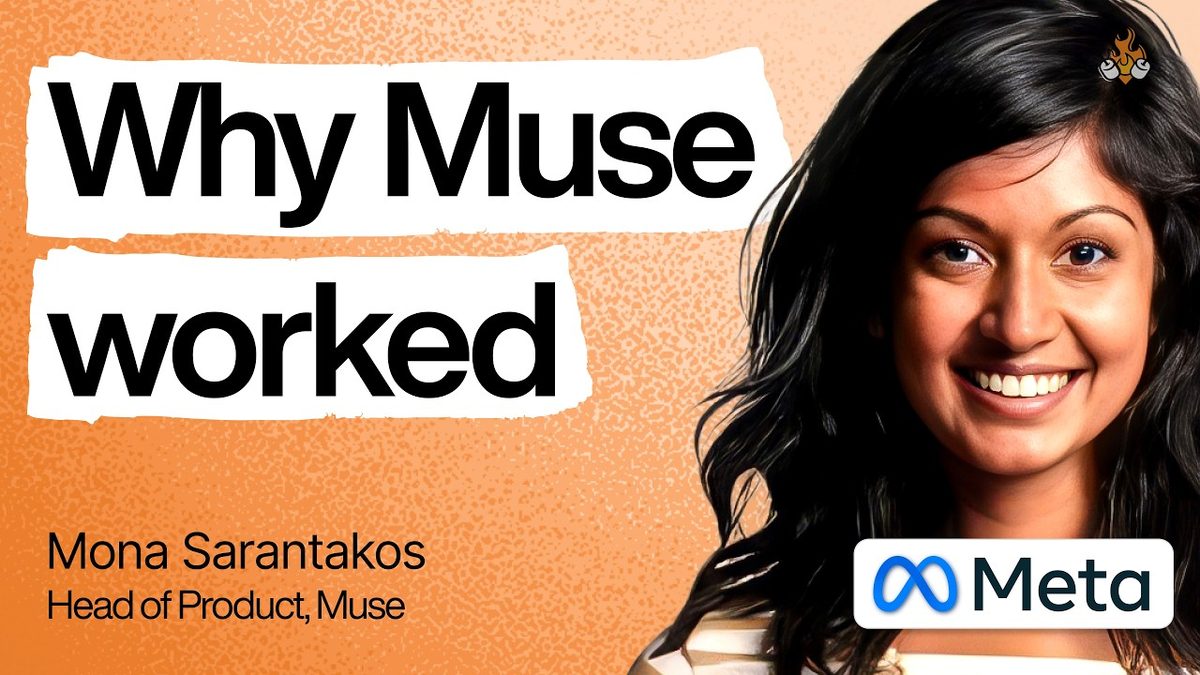
Meta Muse 产品负责人 Mona Sarantakos:先把信任做够再上线;购物才是没料到的头部场景;系统提示词必须手写
一句话结论
在约 87 分钟的首次播客访谈里,Mona Sarantakos 把 Muse 的上线逻辑说成「信任是必须的」:虽然动手更早,仍等了约七个月;真实头部场景是事先没押中的购物;系统提示词必须手写;激活靠看见同类怎么用,而不是只靠广告。
背景与理念
这是 Lenny's Podcast 在 2026 年 11 月 15 日发布的一集,片长约 87.3 分钟,是 Meta Superintelligence Labs 产品副总裁、从第一天起负责 Muse 的 Mona Sarantakos 的首次播客访谈。主持是 Lenny Rachitsky。对白来自 YouTube 英文原始自动字幕,引用时建议对照录像;节目简介里的 OpenClaw,自动字幕常听成 Oculot 或 Open Clot,正文按官方简介写作 OpenClaw。不要和站内已有的扎克伯格、Alexandr Wang 谈 Muse,或 Claire Vo 对 Muse 的横评混在一起:本集是带产品的人,把周末原型、大约七个月才上线、用例被购物改写、激活杠杆和系统提示词必须手写,都讲清楚了。节目标题和简介把 Muse 说成「the #1 app in the App Store」和「arguably the fastest-growing AI consumer product of all time」,这是节目口径,不是独立核实过的市场份额。
具体做法
起源是一个周末,不是路线图
她本来在半年规划里,把消费级智能体写成 2026 年底、也许 2027 年的题目,转折来自 Nat Friedman 的一则消息。她转述 Nat 的话说:「I'm using OpenClaw. You guys need to get on it.」她自己则说:「I'm going maximalist.」她接上邮箱和日历,想买 Mac Mini 却缺货,后来用丈夫找出的 Raspberry Pi,花掉整个周末。周一早上,孩子要去上学,她一向不太跟得上学校通讯和门户,却突然觉得「really productive and on top of」,而「I never felt on a Monday morning, right? Particularly in my personal life.」她随即意识到:若要面向 Meta 的消费者,「it's going to have to be way safer, it's going to have to be way easier to set up, it's going to have to be scalable.」
信任是上线门槛,故意多花大约七个月
内部有一句口头禅:「trust is a must。」Lenny 提到 Grok Bot、Duet、Dots 大约两三个月就上线,Muse 用了约七个月。她的解释是:「If we launch too early and we have a bunch of issues, people will not trust this agent. If you don't trust the agent, you're never going to use it.」能力一加,攻击面就变:一开始 Muse 没有浏览器,加上之后「suddenly you have a whole new set of problems that you have to solve, you know, from a security angle.」丈夫后来问后不后悔晚发,她说:「I don't think I'd change anything. Like I really think that we like there was a bar we needed to hit. It took us the time that we needed to get there. And I'm glad that we did because we like we so far haven't had a catastrophic problem.」
领导怎么给反馈:把手机递过去,并把产品从「完成任务」拉回「对齐人生目标」
她说自己从没经历过这样的产品做法:「We would give Mark our phone and be like, what do you think? And he'd play around with it and give us feedback.」她转述 Zuckerberg 一开始就说:「the purpose of Muse is to make people's lives better and to help them achieve their goals。」团队其实都明白,却从没明说,还一度「gotten lost in, like, the task part of Muse」,围着任务完成率打转。他把大家拉回来以后,才有了后台的「dreaming and studying」,以及 Goals 这样的入口。
Jolly 是临时占位,却变成一条原则:智能体是你的,不是公司的
设计师在第一版原型里放了一个临时形象,后来变成 Jolly;隔几个月就有人觉得,Meta 不该上线一个毛绒角色。她的理由是:「when you're talking to something that feels so personal, the last thing you want to talk to is a corporate logo.」原则是:「the Muse is yours and like we wanted to really be yours and not like a meta entity necessarily.」「the agent needs to work for you. You are the owner... And we will have guard rails and we will have a charter and we will make sure that the agent is abiding by the law... but the rest of it really needs to be you.」原则先写清楚,吉祥物这类争论才不会被公司习惯带跑。
用例被现实改写:购物爆发,家庭自动化没有预想中那么大
她事先押的是个人效率、健康和个人财务,有人还看好家庭自动化;结果狗饭用户里购物突然变多,「it was a complete surprise」。「But now shopping is one of our top use cases.」评测原来都堆在另一边,他们只好把评测重心转到购物。她不赞成把逛彻底砍掉:「I actually don't think people are going to be satisfied if we cut out browsing, right? Like that's going to be sad.」智能体可以缩小选择、打破决策瘫痪,但灵感和逛本身还得留住。
Agent swarms 做洞察和评测;系统提示词必须手写
团队会派出一批 agent swarms,去看真实对话、带回问题,也可以做合成数据,再喂进评测。购物起来以后,就把「用例级评测」跟着搬过去。她还强调,人必须看数据:「when we don't, we always have issues。」最近变成一条硬规矩:「our system prompt has to be handwritten. Like it has to be like you cannot use an AI to write a system prompt, any part of it. It must be handwritten.」评测和提示词分布也要人查,确认它跟产品现实一致。
激活是第一难题:口碑和「看见别人怎么用」比广告有效
她把激活直接说成「the number one problem that we have」。用户常问的是:「why I already have a chatbot like I don't get it.」最有效的杠杆是口碑。她讲过一次:一位妈妈把手机递给旁边的人,让大家看自己怎么用,「two people downloaded it right there」。无论怎么打广告、把话说成 personal super intelligence,「it didn't quite resonate until they saw somebody else」——看见跟自己相似的人在用。第二个杠杆是 Ideas Tab 里的 starter packs,解决第一句不知道说什么;并且早期采用者和后期用户的 onboarding 要分开,因为「what worked for the first cohort of users, which was like the early adopters, isn't going to work for later adopters.」
协作里的分寸,以及产品经理的新门槛
主会话还是侧会话,内部一度分成 Team Main Chat 和 Team Side Chat,争得很凶。他们后来加了侧会话做心理分隔。一次把两个同事的 Muse 拉进群聊,他们「learned about discretion the hard way」:其中一个 Muse 把同事前一天去看医生的事告诉了另一个人。多人和多代理场景里,分寸和授权还没做对。对产品经理,她说门槛已经变了:「the bar for PM has really changed. So like product taste now is the most important thing.」因为「AI slop is very easy to put out into the world」。核心团队一直不大,「under 100 um, all in like you know, with functions and everything with all the functions。」
下一步:走出应用,少当电子宠物,并帮助财务改善
她说现在的 Muse「it's sort of trapped in an app. Soon, it should be in your glasses, on your charm devices, whatever that might be.」她也不希望用户一直盯着智能体,像在喂电子宠物:「you spend a lot of time kind of of like like look at the Tamagotchi」。她期待智能体少要人照看,并认为「there's like a real opportunity for agents to be able to expand your world in lots of ways, including financial betterment.」路径仍在探索,不是已经定死的功能清单。
关键数据/例子
这场访谈长约 87.3 分钟,YouTube 发布于 2026 年 11 月 15 日下午(美国太平洋时间早上),官方章节里可以清楚看到「七个月才上线」「没料到的购物场景」「agent swarms 与合成数据」「激活与口碑」等主题。她谈到团队核心规模是「under 100」、全职能算上;激活方面有一次面对面示范当场两人下载。购物成为头部用例,是狗饭阶段的意外,不是事先规划。这些都是她在访谈里的第一人称叙述,不是对照实验或第三方审计数字。节目标题里的「most successful / fastest-growing」是节目简介口径,正文不要当成已核实的市场排名。
创新点
第一,她把「信任」写成上线门槛,而不是发布后的抛光:邮箱、日历和代购一旦接上,事故是一次性的,所以宁可晚大约七个月。第二,真实头部用例会改写评测,不要用极客狗饭里的家庭自动化去赌主流场景。第三,系统提示词和行为规格必须人写、人审;agent swarms 可以挖洞察和做合成数据,但不能代替看数据。第四,激活靠「看见同类怎么用」和起步模板,而不是只靠广告话术。
可否复用
- 个人智能体不要和聊天机器人比谁先上线。邮箱、日历、代购一旦接上,先自建够用的安全与可靠性门槛,再加浏览器这类会扩大攻击面的能力。
- 评测要跟着真实用例搬家。事先押的效率、健康、财务,未必是用户真正用得最多的;Muse 的头部场景后来变成购物。
- 系统提示词和行为规格必须人写、人审。可以用 agent swarms 去看对话、做合成评测数据,但数据本身还得人看。
- 激活不要只靠广告。让人看见跟自己相似的人怎么用,再用 starter packs 解决空白第一句;早期用户和后期用户的引导要分开。
- 先把产品原则写死:智能体为你工作,不是为品牌工作。多代理、多玩家协作上线前,先解决分寸和授权,否则会泄露不该说的日程。