Mira Murati × Dartmouth:Inkling 开源权重加 Tinker 定制,反对把智能集中「租用」;最需保护的是判断力
一句话结论
在约 51.5 分钟的演讲里,Mira Murati 把 Thinking Machines Lab 的方向概括为:发布开源权重 Inkling,再用定制平台 Tinker 让人们在自有数据上继续训练,从而「拥有」而不是「租用」智能;她同时提醒,今日系统过度优化自主,还要发展和测量人机协作,对学生来说最需保护的是判断力。
背景与理念
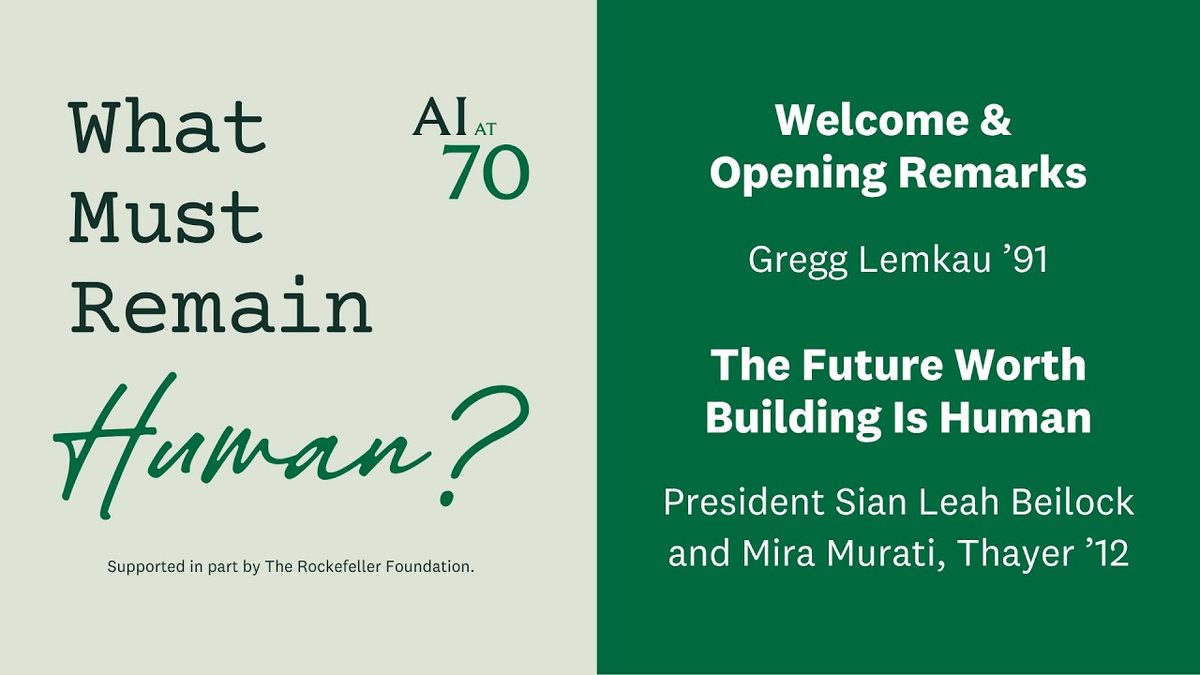
这是 2026 年 10 月 29 日发布、约 51.5 分钟的演讲,场合是 Dartmouth「AI at 70: What Must Remain Human」,嘉宾是 Thinking Machines Lab 联合创始人兼首席执行官 Mira Murati。对白来自第三方核对转录,引用时建议对照录像。不要和 2026 年 6 月 4 日的 Bloomberg Live 旧访混在一起。谈话的主轴是:做能推进人类意志与判断力的系统,用开源权重加定制平台避免把智能集中出租,以及在真实部署里看清幻觉和滥用。
具体做法
推进人的意志和判断,而不是替人做完
她把公司使命说成:做能推进人类意志与判断力的强人工智能。原话是:「Thinking Machines is focused on building strong AI systems that can advance human will and human judgment. And by will I mean the intent of deciding to do something, and in judgment, deciding what to do, what to work on, and also being able to decide whether the outcome is good, bad, you know, having a standard for what's actually good.」现有模型已经非常强,研究员实验失败时立刻就能检索到相关论文;「but these models don't have access to the specific experiment that you ran in the lab, and they don't know why the experiment failed。」这份知识往往分散、默会,有的写得清楚,有的只存在于一群人的脑子里。所以要让系统真的有用,它必须知道你在做什么、有相近的上下文,也要懂得协作的风格。
开源权重 Inkling 加定制平台 Tinker,反对「租用智能」
她说这个夏天发布了两个开源权重模型 Inkling,并提供名为 Tinker 的定制平台,让客户和研究者在自有数据和用例上继续训练。原话是:「this combination is a system that allows people to truly own the intelligence versus renting it, because they can continue to train the model on their data and their use cases.」他们还在做 interaction models:让人和机器的协作更接近人与人,而不是只通过提示框。「Until this point, we've been the ones to try to understand how to use the computer… But now… the computer for the first time can come towards us and understand us.」
反集中:不只是权力,还有思维的同质化
她承认资本和算力会把智能推向集中,但他们要走的另一条路,是许多可拥有、可定制的智能模型,而不是少数超级模型供所有人租用。「There is certainly a concentration, because it takes enormous capital and compute… the economics of it favor scale and concentration。」人们谈了很久权力和金钱的集中,「I think something that has been less talked about is… the sort of loss of intellectual diversity… Everyone sort of ends up inheriting the same strengths and the same blind spots… this creates this risk of sameness… you end up with a convergence of thinking。」要对抗这种动量,需要真的付出努力,因为资本、算力和人才本身就往集中走。
部署课:能力可能已经够了,缺的是界面;实验室看不到野外的摩擦
她回顾在 OpenAI 为 GPT-3 做接口的经历,认为那是深度学习第一次被带进经济;直到 ChatGPT,他们才发现能力其实已经够用一段时间,缺的是技术乘以界面。「it wasn't until ChatGPT that we realized the capabilities had been good for a while, but it was this combination of the technology and the interface that made ChatGPT so easy to use and such a magical experience。」幻觉和滥用,研究团队早就在做、也发表过,「but it wasn't until we saw these cases in the wild, the concrete cases… that we were able to advance and deal with building more robust guardrails… It's very hard to simulate the reality of friction and usefulness。」
协作,而不只是自主
她把人机协作比作和靠谱同事共事:可以并行,再回到一起;沉默也是信息,也包括打断、把对方的想法往前推一步。这和今天主要通过提示框协作非常不一样。「Today's systems are very optimized for autonomy, and autonomy is good… especially for tasks where AI systems get very strong and reliable. But we also need to develop and measure collaboration between AI systems and ourselves, and measuring the outcomes, having some sort of benchmark, and making this something that we care about as a field.」协作里也包含主动性,但这需要信任、需要知道何时委托,也需要更高的可靠性。
给学生:不要用四年去赌哪些工作不会被抢走;保护判断力
她建议学生不要把大学四年花在猜测哪些岗位或任务不会被人工智能抢走,而要深耕、和意见不同的人做实际项目,并使用这些工具。「I don't think it's a very good use of time to spend the next four years thinking about what jobs will not be taken by AI or what tasks will not be taken by AI.」招人时她看独立思考和判断;最需要保护、也最需要培养的人类能力,是 judgment。在对齐问题真正解决之前,要把人类的理解放在中心。
关键数据/例子
这场演讲长约 51.5 分钟,YouTube 发布于 2026 年 10 月 29 日。她提到这个夏天发布了两个开源权重模型 Inkling,以及供客户和研究者定制的平台 Tinker。关于 GPT-3 接口和 ChatGPT 的回顾,是她用来说明「能力可能已经够了,缺的是界面」以及「实验室很难模拟野外摩擦」的例子,文中没有另给量化指标。
创新点
第一,她把产品路线写成「开源权重加定制平台」,让使用者在自有数据上继续训练,从而拥有智能而不是租用智能。第二,她提醒集中的风险不只是权力和金钱,还有智识多样性丧失和思维同质化。第三,评系统和产品时不要只看能不能独立做完,还要发展和测量协作:并行再会合、接住沉默或打断、委托边界清不清楚。
可否复用
- 能拿开源权重在自有数据上继续训练的,就尽量把智能变成可以拥有、可以改编的资产,而不是只租用少数超级模型。
- 评模型和产品时,不要只看能不能独立做完;补上协作方面的标准:能不能并行再会合、能不能在你沉默或打断时接住上下文、委托边界清不清楚。
- 新能力上线后,一定要放到真实使用里看幻觉和滥用的具体样子,实验室模拟替代不了野外的摩擦与有用性。对学生和招人:少花时间猜哪些岗位不会被抢,多练判断力——答案对不对、完不完整、伦理上站不站得住,以及能不能解释清楚。